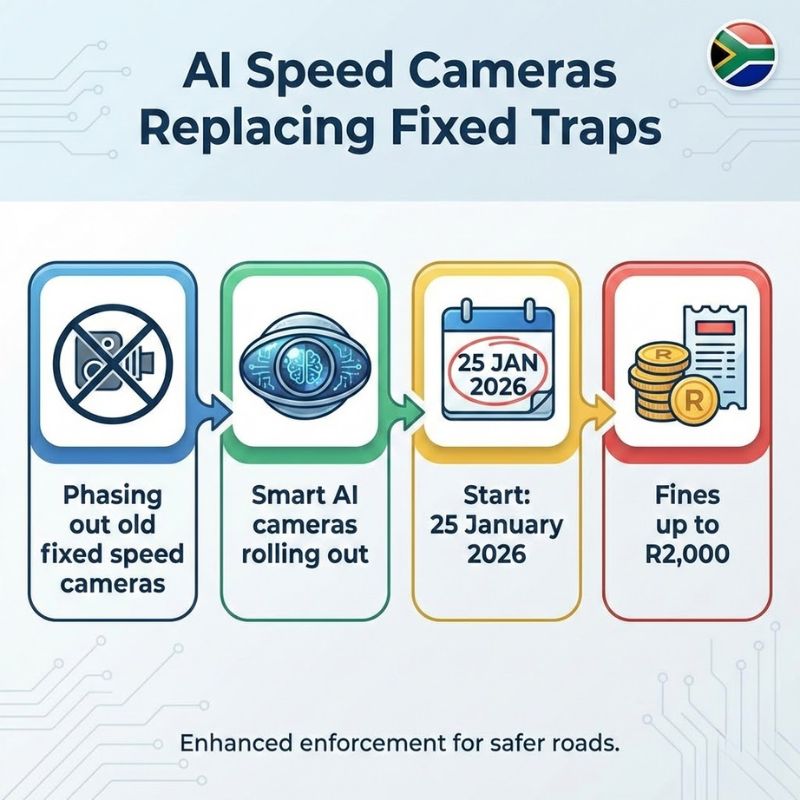
South Africa is entering a new era of road enforcement as fixed speed traps begin to disappear from major routes. From 25 January 2026, authorities will roll out smart AI-powered cameras capable of tracking driver behaviour in real time, issuing instant penalties for violations. These advanced systems are designed to improve safety, reduce accidents, and close loopholes drivers once exploited. With fines starting at R2,000, motorists across the country are being urged to understand how the new technology works and what it means for daily driving.

Smart AI speed cameras replace fixed speed traps
The shift away from traditional speed traps marks a major upgrade in traffic monitoring. Unlike old systems tied to one location, AI cameras can analyse vehicles as they move, identifying patterns rather than isolated moments. Using real-time tracking, automatic violation detection, and multi-lane monitoring, these devices spot speeding, tailgating, and sudden lane changes. Authorities say data-driven enforcement will make roads fairer by focusing on risky behaviour, not just speed at one point. For drivers, this means habits matter more than memorising camera spots.
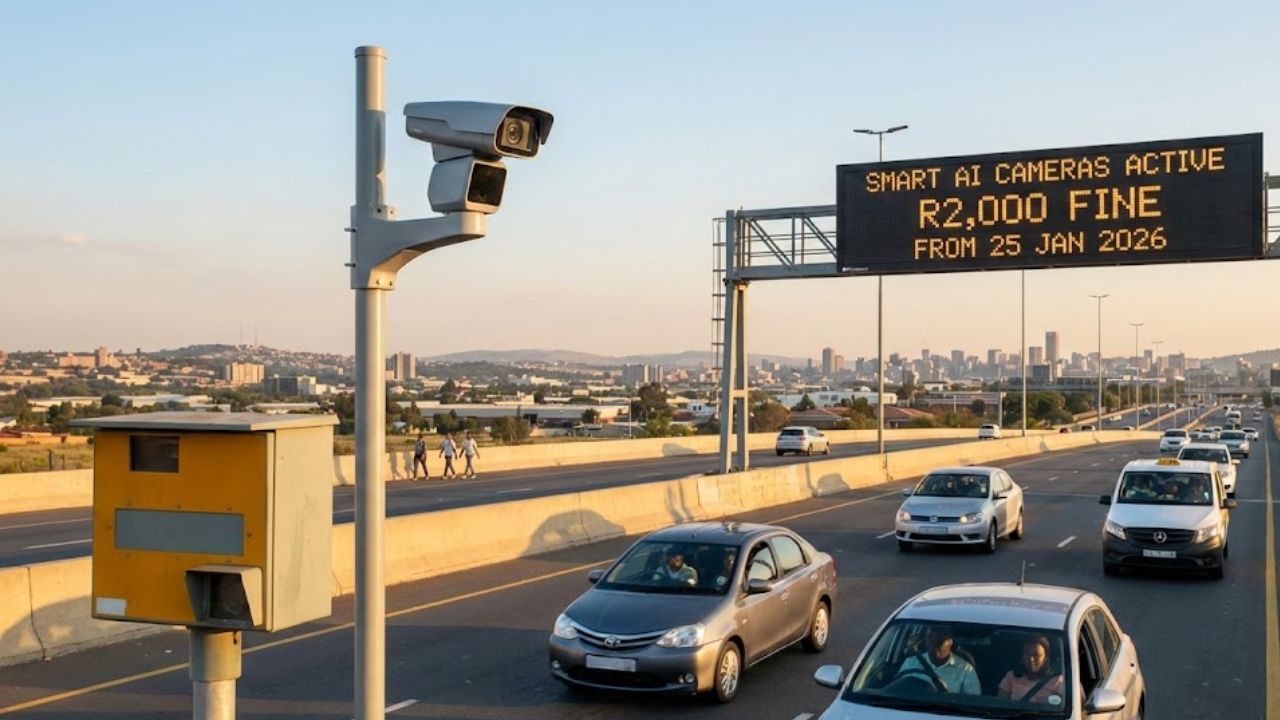
R2,000 fines under new AI traffic enforcement rules
From 25 January 2026, penalties will hit harder for those ignoring the rules. The base fine of R2,000 applies to serious violations captured by AI cameras, with higher amounts possible for repeat offences. Officials argue that instant penalty notices, digital fine delivery, and centralised offence records will reduce disputes and delays. The aim is stronger deterrence, ensuring drivers think twice before risky moves. For many motorists, the cost alone is enough to encourage safer, more consistent driving.

How AI cameras change everyday driving in South Africa
These smart cameras are expected to influence how people drive on a daily basis. Because they assess behaviour over distance, drivers can no longer rely on slowing briefly near known hotspots. Features like continuous behaviour analysis, pattern recognition systems, automated evidence capture, and reduced human error aim to create accountability. Authorities believe this will lead to smoother traffic flow and fewer accidents. Over time, adapting to consistent, law-abiding driving may become second nature.
What this shift means for motorists
The move to AI-based enforcement reflects a broader push toward smarter transport management. While some drivers worry about privacy or fairness, officials stress that transparent enforcement standards, improved road safety, faster dispute resolution, and nationwide consistency are key benefits. For motorists, understanding the system and adjusting habits early can prevent costly mistakes. Ultimately, the technology is designed not just to punish, but to encourage safer roads for everyone.
| Feature | Old Speed Traps | AI Smart Cameras |
|---|---|---|
| Coverage | Fixed location | Multiple road sections |
| Detection Method | Single speed check | Continuous behaviour analysis |
| Fine Notification | Delayed notice | Digital and faster alerts |
| Error Risk | Higher | Lower with automation |
| Deterrence Level | Moderate | High due to consistency |
Frequently Asked Questions (FAQs)
1. When do AI speed cameras start operating?
The rollout begins nationwide from 25 January 2026.

2. What is the minimum fine under the new system?
The base fine for serious violations starts at R2,000.
3. Do AI cameras only detect speeding?
No, they also monitor unsafe driving behaviours.
4. Can drivers still contest fines?
Yes, formal appeal processes will remain available.